
Expanding Expeditionary Learning
AmeriCorps VISTA Member Creates Program Growth at La Tierra Community School
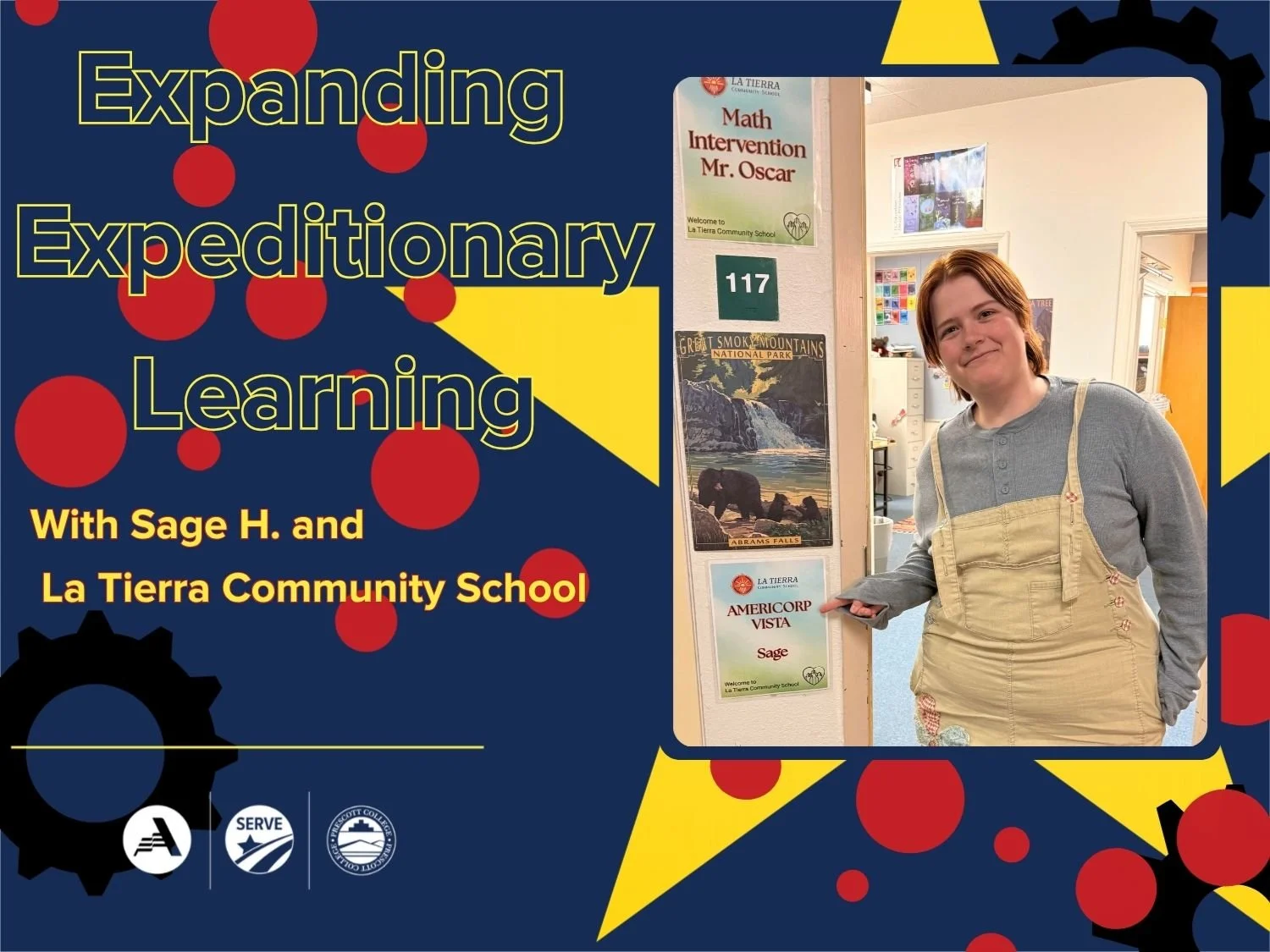
La Tierra Community School is a tuition-free public charter school in Prescott, Arizona. It serves roughly 140 students, approximately 65% of whom qualify for free or reduced-priced lunch. La Tierra promotes multi-subject/cross curricular studies, utilizes active pedagogy, and fosters collaborative leadership. Here, AmeriCorps VISTA Member Sage H. is serving as the Development Specialist. Part of the role involves expanding the school’s expeditionary learning opportunities.
Expeditionary learning involves hands-on student exploration rather than education exclusively through bookwork. It often focuses on project-based tasks that take place outside the classroom. It also creates situations where students can develop service skills, compassion, empathy, and care.
One of the goals of Sage’s VISTA projects is to design and implement a dependable system for planning, coordinating, and documenting field trips and community learning experiences that align directly with classroom lesson plans and the school’s expeditionary learning mission. This will lead to stronger connections between local resources and hands-on education.
AmeriCorps VISTA service that works toward maintainable programmatic expansions benefits more than the site where the member is serving. It can develop partnerships among similarly minded individuals or organizations, which can cause a continued effect throughout a city, county, or state.
As part of the development project, near the end of October 2026, Sage helped coordinate a 6th grade field trip to the Prescott Farmers Market Community Compost site. There, students learned how food scraps are collected and processed so they can go back out to the community as soil amendments. This process creates a long-term way to manage food waste. According to their website, “Each week, 200+ customers deposit over 2,500 pounds of acceptable food scraps at the farmers market’s Compost Booth.”
Developing expeditionary learning programs sets up more students to become more engaged citizens. It also generates opportunities for continued education by focusing on active community concerns and situating students amid projects they can return to with their families to deepen their interests, learn further skills, or volunteer their time.
